Adding Po Numbers On Quickbooks For Mac 2016
Your best bet: Subsume the customer with fewer jobs so you don’t have to move very many. (If you don’t use jobs, then subsume whichever customer you want.) To merge customer, job, or vendor records with a minimum of frustrated outbursts, follow these steps. • If you work in multi-user mode, switch to single-user mode for the duration of the merging process. See to learn how to switch to single-user mode and then back to multi-user again after the merge is complete. • Open the Customer Center or Vendor Center.
The envelope template selection is controlled from the Preferences window. Import Transactions from Square The transaction Importer, which was introduced in QuickBooks for Mac 2015, now includes the ability to import Sales Receipts from Square. Last year’s release included many new features, including batch transaction importing, drill down on sales tax reports and a budget redesign. This year’s update was just as huge, but in a way that is not immediately obvious to the user. The redesign of the memory system should result in performance improvements that will benefit all accountants and their clients just as much as a showy new feature.
• The day you start your company. If you just started your business, the start-date decision is easy: it’s the day you start your company. • The last day of the previous fiscal year. If your business has been running for a while, the best approach is to fill in your records for the entire current fiscal year. To do that, use the last day of your company’s previous fiscal year (or December 31, if you use the calendar year) as the company file’s start date. That way, the account balances on your start date are like the ending balances on a bank statement, and you’re ready to start bookkeeping fresh on the first day of the fiscal year.
The borders can be removed. The data can be left justified to match the margin of the address. In the end, the address/phone number block will appear like this: Hector Garcia, CPA Certified Advanced QuickBooks ProAdvisor 12401 Orange Drive #136 Davie, FL 33330.
Since you can now drag accounts in your chart of accounts list to rearrange the order, account numbers no longer serve that purpose. Account numbers are primarily a tool to organize account numbers outside of QuickBooks, such as in Excel, and to improve the readabilty of your account list.
As far as enlarging a field – sorry, you are out of luck, you can’t change the maximum field lengths shown here! • Account Name: 31 • Account Numbers: 7 • Amount: 99,999,999.99 (Maximum number allowed) • Custom field: 30 • Customer message (Invoices): 101 • Customer, Vendor and Other names: 41 • Employee Name (first and last): 25 • Item description (Invoices): 4095 • Item Part number: 31 • Job Description: 99 • Memo: 4095 • Note Field: 4095 • Notes in Shipping/Billing Address: 41 • Password: 16 • Ship to Name: 41. There are two address blocks – essentially “ship to” and “bill to”. If you don’t need both for the customer, relabel them and have one be “customer address” and the other “contractor address”. Other than that, there are “custom fields” that you can add. You have a number you can add to the header, but each is a single line of 30 characters each. You have to add several to be able to have an address.
(The options in this menu are the same as the ones available in report windows; see.). Tip To view a transaction in its corresponding window, double-click it in the Transactions tab’s table. Click the Contacts, To Do’s, Notes, or Sent Email tab to create, edit, or view contacts, to-dos, notes, or sent email for the selected vendor. • Review transactions for all vendors. When you click the Transactions tab on the left side of the window ( not the one on the bottom right) and then click a type of transaction, such as Bills or Bill Payments, you’ll see transactions of that type for all vendors on the right side of the window. You can filter these transactions by status (such as open or overdue), by date, and, if you use multiple currencies, by currency.
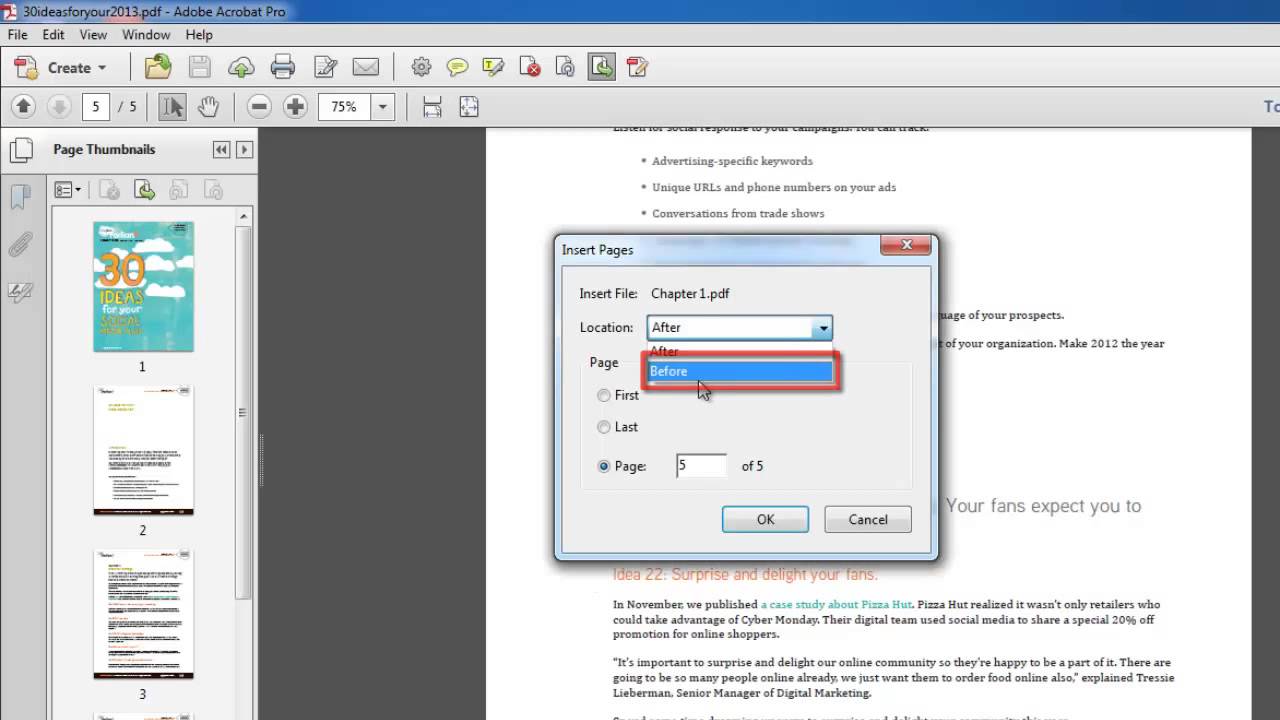 Installing Adobe Acrobat Reader DC is a two-step process. First you download the installation package, and then you install Acrobat Reader DC from that package file. Install Adobe Reader for Mac as you would any other Mac application. Adobe Acrobat Reader for Mac Versus Adobe Acrobat DC. Adobe Acrobat DC is a complete PDF viewing and editing solution packed with best-in-class tools to satisfy all PDF needs.
It points to the field that identifies the template being used for this invoice transaction. This field will always be available on any transaction window where the form can be changed or customized. The template can be changed at any time. It will not change the transaction. It is merely a different way of viewing the same transaction. The top arrow points to an icon on the Formatting tab of the transaction window ribbon. This icon will open the customization options for this template.
Creating a QuickBooks Purchase Order Creating a QuickBooks Purchase Order You can create a QuickBooks purchase order directly from your UDA Estimate. With QuickBooks purchase orders, you can order goods or services, keep track of what you have ordered and received, and create bills. @ IMPORTANT: QuickBooks exports are irreversible. Backing up QuickBooks before exporting from UDA Estimating protects your accounts from possible errors.
Enable Purchase Order in QuickBooks Depending on your version of QuickBooks, you may need to tell QuickBooks that you want to use purchase orders. • In QuickBooks, go to Edit > Preferences. • Depending on your version of QuickBooks, you will have one of the following options (you may need to scroll down in the left column): QuickBooks 2006 and prior: choose Purchases & Vendors.
Tools Menu > Options > View > Check the box for Outline symbols. In the event you still are having trouble displaying this awesome tool, simply, while the report is displayed in Excel 'Click Control + 8': Set up your customized groups- You organize your filing cabinets for easy access of your business records. Use the same concept to set up the reports you use frequently. Quickbooks predefines up to 7 reports group headings and each group heading contains up to 9 reports. All of these reports are also available in the reports menu.
To identify your income based on how customers learned about your services, enter this info in a custom field (). That way, you can create a report that shows the revenue you’ve earned from different marketing efforts—and figure out which ones are worth the money. Hiding Records Hiding customers, jobs, and vendors isn’t about barricading them in a conference room when the competition shows up to talk to you. Because QuickBooks lets you delete these records only in very limited circumstances, hiding them helps keep your lists manageable and your financial history intact. Although your work with a customer, job, or vendor might be over, you still have to keep records about your past relationship. But old records can clutter up your QuickBooks lists, making it difficult to select the people and companies you still work with.
QuickBooks’ answer to this issue is custom fields. After you create a custom field and apply it to a list, QuickBooks adds the custom field’s label and a text box to the Additional Info tab (, background). You have to type your entries in custom field boxes each time; there’s no drop-down list or a way to compare it with text you entered in other records. So it’s up to you to make sure that your data entry is correct and consistent.
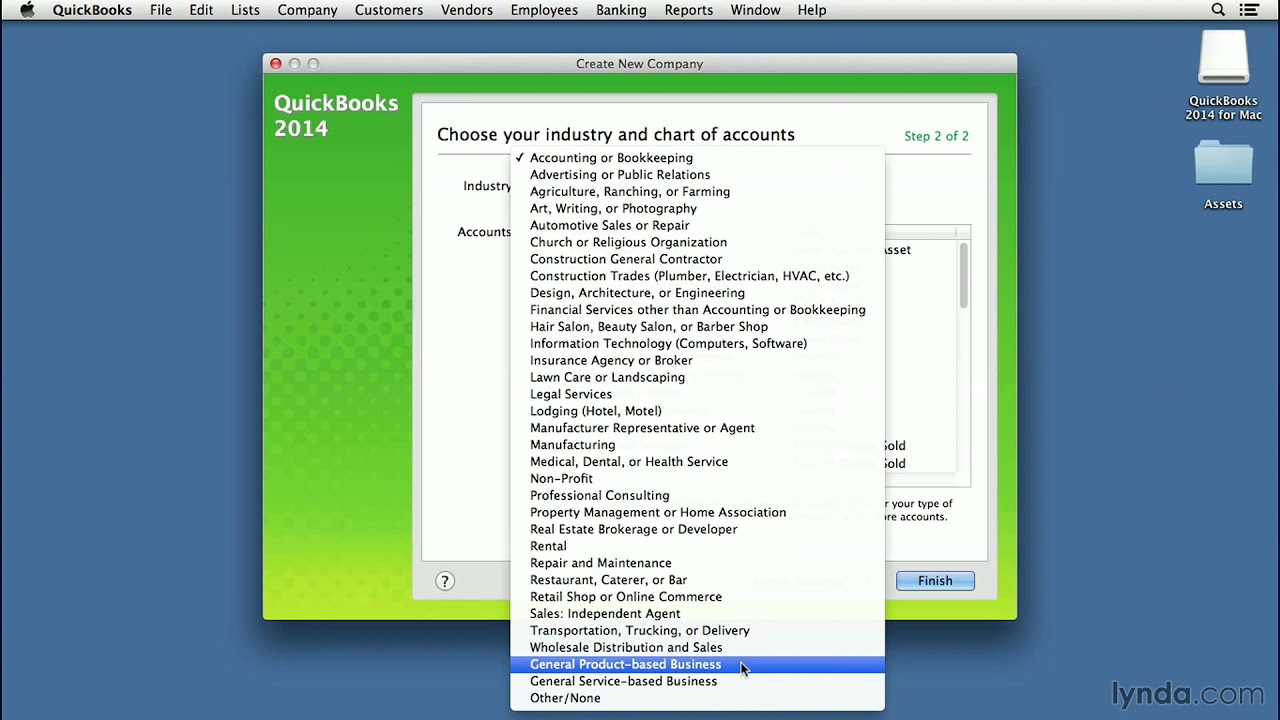
QuickBooks makes it easy to create a company file from scratch. (The box on tells you how to find someone who can help you create one.) You can opt for a short and sweet process, which asks you for the bare minimum of info before it creates your file. Or you can use a wizard that guides you through the process with a series of questions that takes about 15 minutes to answer.
To start at the beginning of this fiscal year (which QuickBooks can figure out using the current calendar year and the starting month you select), choose the “Beginning of this fiscal year: 01/01/15” option. (The year you see listed depends on the current calendar year.) If you’ve decided to start on a different date, select the “Use today’s date or the first day of the quarter or month” option instead. You can then type or choose any date you want in the box, such as the last day of the previous fiscal period.
You can also edit the Description field so that it makes sense to customers or vendors. • Qty: The Qty column lets you identify the quantity of the item that you want. You enter the number of items that you want in this field, obviously.
To simply add the new job to the Customer:Job List, click Quick Add. To open the New Job window so you can enter detailed job info, click Set Up instead. Or click Cancel to close the message box without creating a new job. (This shortcut works only if you haven’t filled in the Job Info tab of the customer’s record. If the customer’s Job Info tab already has data in it, then you’ll have to create the job using the New Job window.).
As you drag, the cursor changes to a horizontal line between two arrowheads, as shown in, left. Figure 4-11. Left: When your cursor changes to a four-headed arrow, drag within the Customers & Jobs tab to move the job.
• • • • • • • • From the community This small private company is using Enhanced Inventory Receiving. The vendor invoices them for shipping. • • QuickBooks Desktop, United States • 1 answer • last activity 2:33 pm PDT August 7, 2018 • From the community Using QBPOS Multi-Store and am trying to use Reorder Points function for each remote store. We currently. • • QuickBooks Point of Sale • last activity 3:13 pm PDT June 25, 2018 • From the community For example, we have to include a sales tax item on every PO. When we go to a new PO it would save time to. • • QuickBooks Desktop, United States • 2 answers • last activity 9:40 am PDT May 1, 2018 • From the community I am all over the vendor section, and I do not see where and how you can create a purchase order to a.
You can also select the customer in the Customers & Jobs tab and then, in the Customer Center toolbar, choose New Customer & Job→Add Job. Either way, the New Job window opens. • In the Job Name box, type a name for the job.
• Look for a file with the extension '.tlg' and right-click it. • Select Delete to delete the file.
We enter the Customer Invoice (if more than one user is on the Invoice Screen it automatically changes the # and this is a HUGE problem as well.) Same thing as the PO number changing. We enter the Payment Information from the Credit Card Transaction Authorization. What happens is when 2 people are entering 2 different Invoices's (or Purchase Orders) at the same time.
• Find a vendor. If you have a bazillion vendors, you can shorten the vendor list that you see in the Vendors tab on the window’s left side. The tab’s unlabeled drop-down list is initially set to Active Vendors. If you want to see active and inactive vendors alike, click the field and choose All Vendors instead. If you’d rather see only the vendors you owe money to, choose “Vendors with Open Balances.” Choose Custom Filter to specify exactly the criteria you want. To do a quick search of vendor records, type part of a vendor’s name in the Vendors tab’s second unlabeled box, and then click the Find button, which has a magnifying glass on it. (The Find button then changes to an X, which you can click to clear the value in the Find box and redisplay the full list.) • Review a vendor’s record.
Comments are closed.